
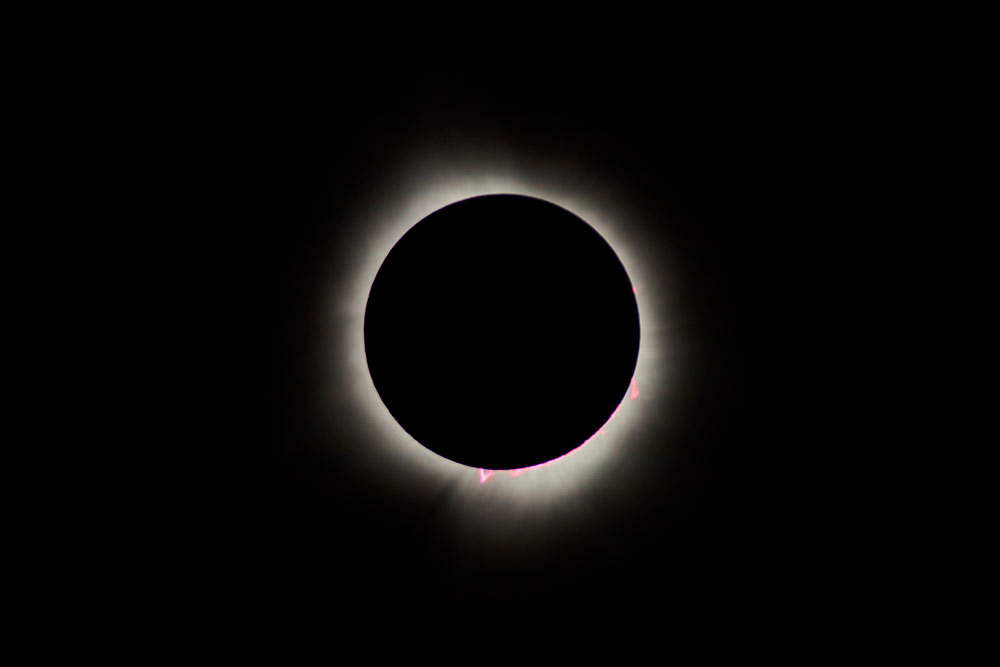
The region of the world known for its “midnight sun” recently experienced an event not seen in decades – a total solar eclipse. The August 12th event saw observers gathering across the Nordic countries to witness the occurrence. Greenland and western Iceland were the best places to be able to see the total eclipse, while the rest of Iceland along with the Faroe Islands, Norway, Sweden, Denmark, and Finland had a deep partial eclipse.
Iceland had been preparing for this event for years and viewing events were set up across the country, but particularly in the western portion. Seeing an increase in tourism related to the event put pressure on local accommodations and infrastructure but was still a success. The last time the country experienced a total eclipse was in 1954 and the next one isn’t expected until 2196.
Greenland had variable conditions, with some places experiencing a 99.7% coverage of the sun, and others were less due to cloud cover. Across Scandinavia, witnesses saw a near total eclipse, sometimes referred to more like a crescent sunset. In some areas though cloud cover and the low position of the sun threatened to obscure the sight.
For Norway, this solar eclipse was the largest it had seen in just over a decade. Observers with a clear view of the western horizon were rewarded with the best results. Svalbard also had very favorable conditions for the eclipse and there was about 91% coverage of the sun during this event.
Viewers in Finland got to see the last of the eclipse, where the event was competing with the sunset late in the evening. However, no matter where it was viewed from, this solar eclipse was enjoyed by many who had been planning years in advance and was enhanced by the beautiful scenery of the Nordic region.