
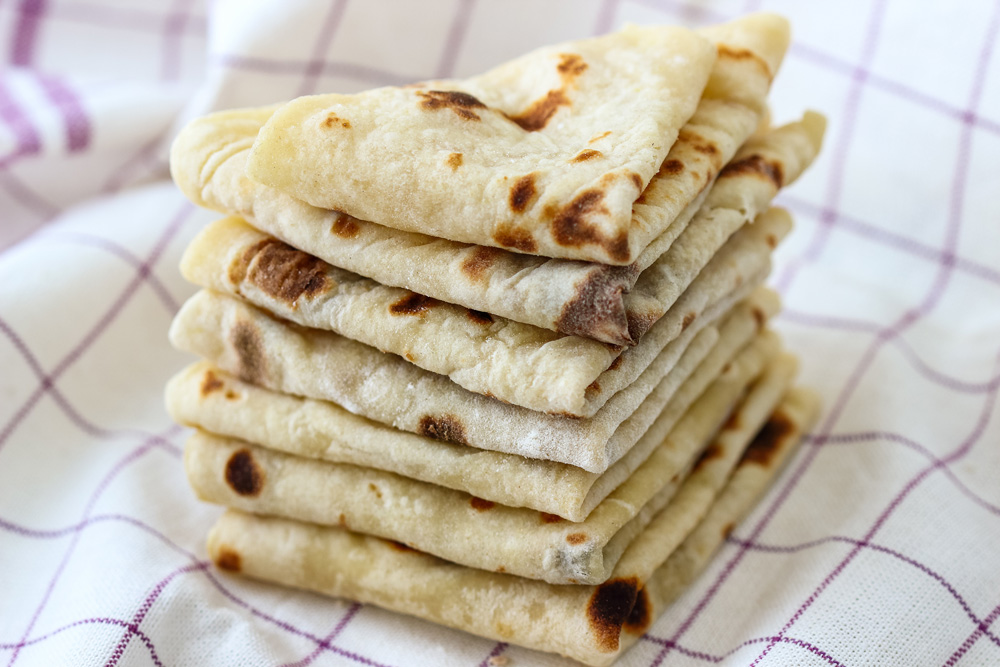
If you live in North America and hear talk of homemade lefse, you might assume that the most important question about the recipe is: real potatoes or potato flakes? For many American and Canadian descendants of Norway, it is simply referred to as lefse, with the potato being an assumed ingredient.
On social media groups with both Norwegian and North American users, this assumption results in all kinds of confusion. The Norwegians say “That’s not lefse, you are talking about lompe” and the Americans and Canadians say “What do you mean by ‘other kinds of lefse’?”
The truth is, Norwegians do make thin lefse with potatoes just like most North Americans—and not just lompe, a thicker, smaller soft potato flatbread chiefly enjoyed with pølse (sausage). But only some Norwegians make lefse with potatoes. Potetlefse (potato lefse) is typically made in Østlandet, (Eastern Norway) and Trøndelag, but not all regions have this tradition.
Regional variety
There countless kinds of lefse in Norway, and most of them contain no potatoes at all. According to snl.no, lefse is a catch-all term for round, flat, soft bread with a wide range of varieties. The one aspect all of the recipes share is that they are made with flour and fat and spread or filled with ingredients before being rolled or folded up.
Classic lefse fillings are butter, cinnamon and sugar, or brown cheese. Some lefser (plural of lefse) are meant to be enjoyed with savory meats, salmon and other typical sandwich toppings. Many kinds of lefse are soft and flexible, but some—like Hardanger lefse—are cooked and allowed to dry for easy storage, and then rehydrated before eating. While lefse can be found all over Norway, Trøndelag, Nordland, and Western Norway have an abundance of recipes.
Let’s roll
A handy way to get started in making lefse is to find a mentor to show you the ropes. Oftentimes this is a bestemor (grandma) or another family member, or a group activity offered at a lodge event. Some lefse makers set up a production line and make a day of it, so you can roll enough for the holidays and have some to spare. There is specialized equipment for lefse-making, including a flat griddle, grooved rolling pin (with or without a sock to keep the dough from sticking), turning stick, special rolling surfaces and more.
Members of Sons of Norway lodges come together to roll lefse
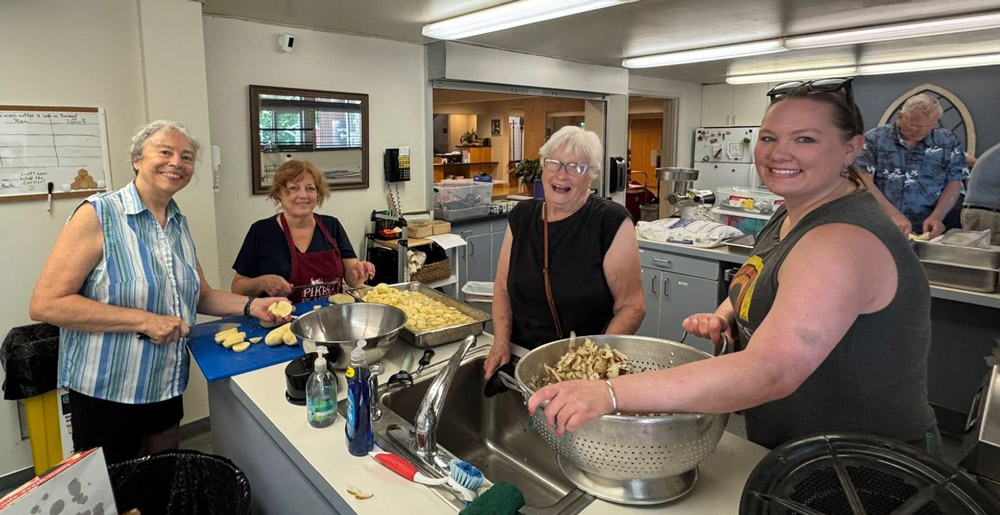
Tordenskjold, 2-005, Spokane, WA
Members of Tordenskjold Lodge preparing potatoes for lefse making. The lefse will be eaten and sold at their annual Lutefisk Dinner.
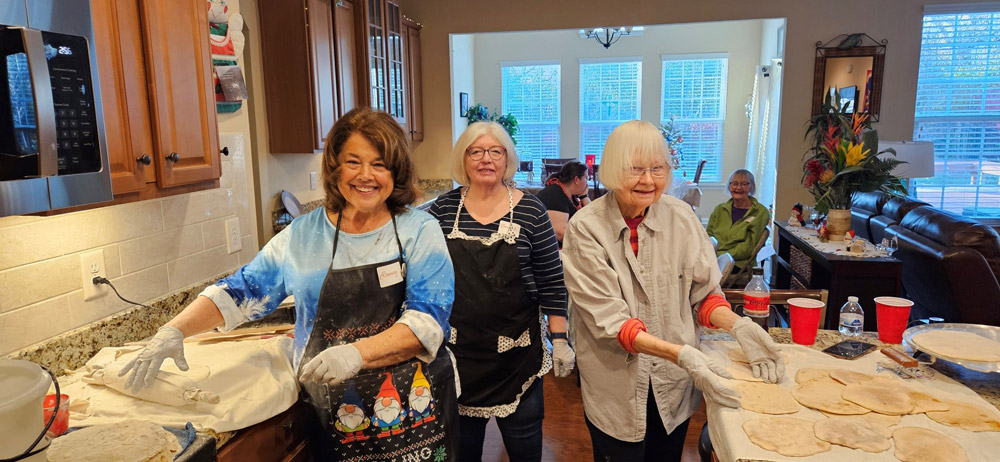
Music City Vikings, 5-681, Nashville, TN
Members of the Music City Vikings gathered at the home of Sandy and Carroll Lane to make lefse to sell as a fundraiser at their annual Julefest. Pictured are Sandy Lane, Brenda Kerr, and Sharon Lassiter.
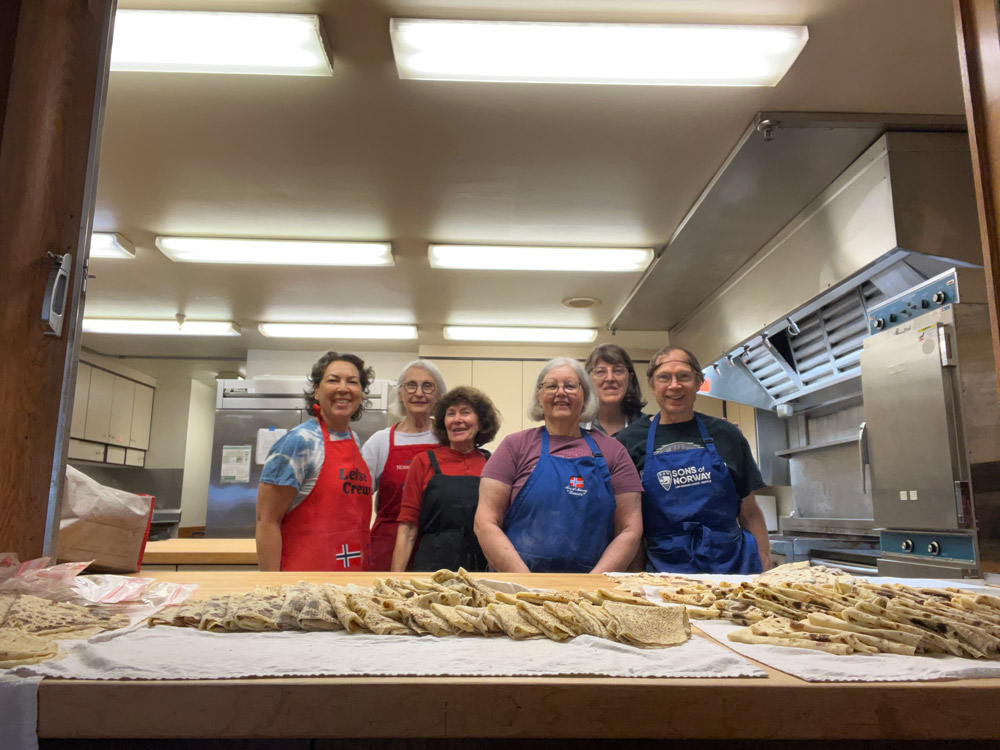
Leif Erikson, 2-001, Seattle, WA
Lodge lefse crew Chica Eustace, Bernice Chouery, Sheila Bartanen, Jan Quam, Gail Engler, Ken Bartanen made lefse to be sold at our Syttende Mai Open House!
Mandt, 5-314, Stoughton, WI
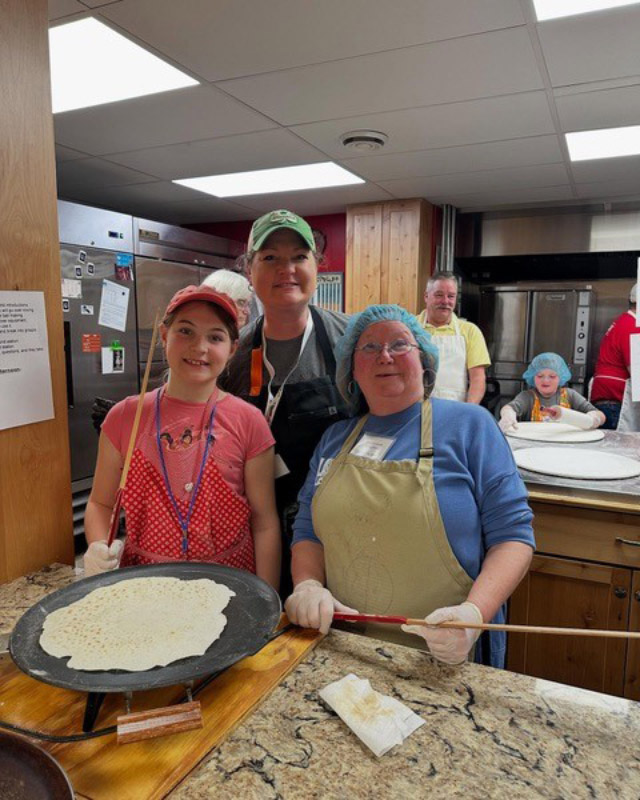
The lodge offered two classes for people to learn how to make lefse. We had all ages attend. Here Hazel and Callie LaPoint are learning how to fry from Jane Conner.
Vikings of the Lake, 6-166, Lake County, CA
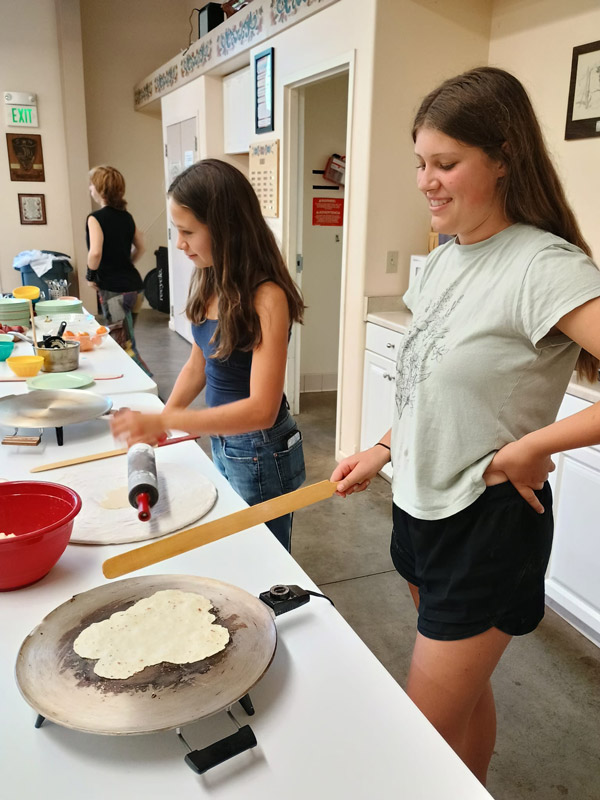
L-R: Anika Ronning (Roald Amundsen 6-048), Paloma Guzman (Freya 6-062), Phoebe Jessen (Vikings of Lake 6-166), making lefse at Trollfjell Folkehøgskule.
Popular kinds of lefse
- Nordlandslefse – thick, smaller rounds. Topped with a layer of smørkrem (butter cream with cinnamon) or gomme, a caramel-like whey spread.
Nordlandslefse is a smaller type of tykklefse from Nordland / Northern Norway. Ingredients like sugar, eggs and syrup were added to enrich the dough for fisherman in Lofoten. - Tykklefse or tjukklefse – thick lefse from Trøndelag filled with sweet creamy butter and sugar and cut in wedges
- Tynnlefse – “thin lefse” from Central Norway made with buttermilk and horn salt as a rising agent
- Potetlefse – potato lefse: the most common type of lefse in the US and Canada. Made in Gudbrandsdalen, Eastern Norway and Trøndelag
- Vestlandslefse – thicker lefse from Western Norway, often made with barley, oat, rye or wheat flour
- Mørlefse, møyrlefse – can be baked in an oven, frying pan or on a griddle – made in Northern Norway and Telemark
- Møsbrømlefse – from Nordland in Northern Norway. Served with a sweet brunost topping
- Anislefse – from the Hordaland on Norway’s west coast is a medium-thick variant spiced up with the addition of whole aniseed.
- Hardangerlefse – (from Hardanger in Western Norway), is made from yeast-risen graham flour or a fine ground whole wheat flour (krotakake/krotekake). It is often made with egg yolks and buttermilk. When dried, this lefse is shelf stable for at least six months. In order to eat it, you wet the lefse and wait for it to puff back up.
- Krinalefse – hailing from Helgeland in Northern Norway, krinalefse is painted with an egg mixture in beautiful patterns is stored in a crispy, flatbread-like state. Later it is wetted and allowed to soften under a towel.
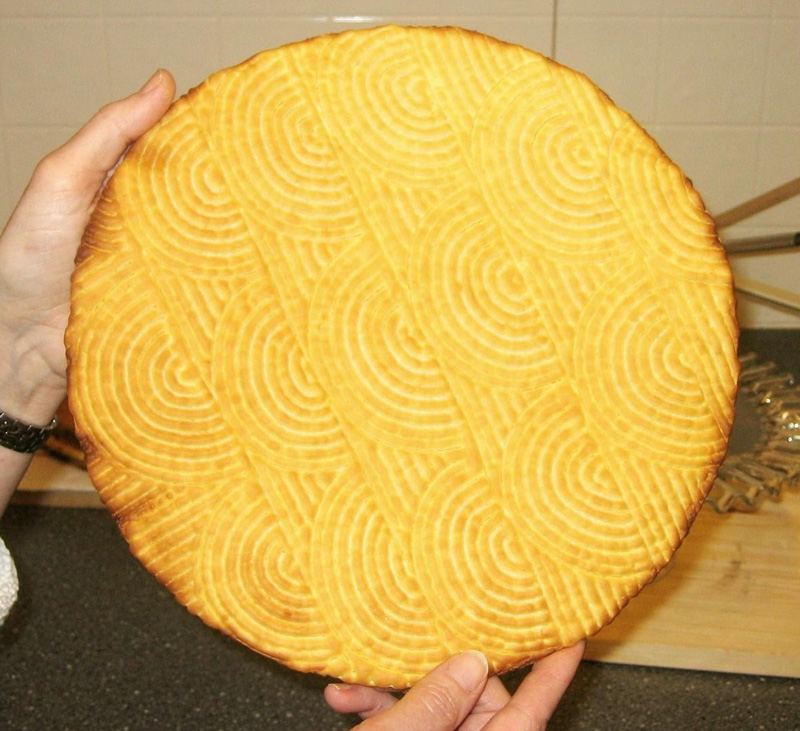
Krinalefse with an especially beautiful design
By Eva Narten Høberg
License: CC BY SA 3.0
Regional names
There are yet more types of lefse. Find a list of other varieties by region on this page in English or on this page, you can search for lefse, lemse, kling, and klenning to find even more recipes in Norwegian.
Sources:
https://snl.no/lefse
https://no.wikipedia.org/wiki/Lefse
https://en.m.wikipedia.org/wiki/Lefse
https://www.visitnorway.com/things-to-do/food-and-drink/lefse/