
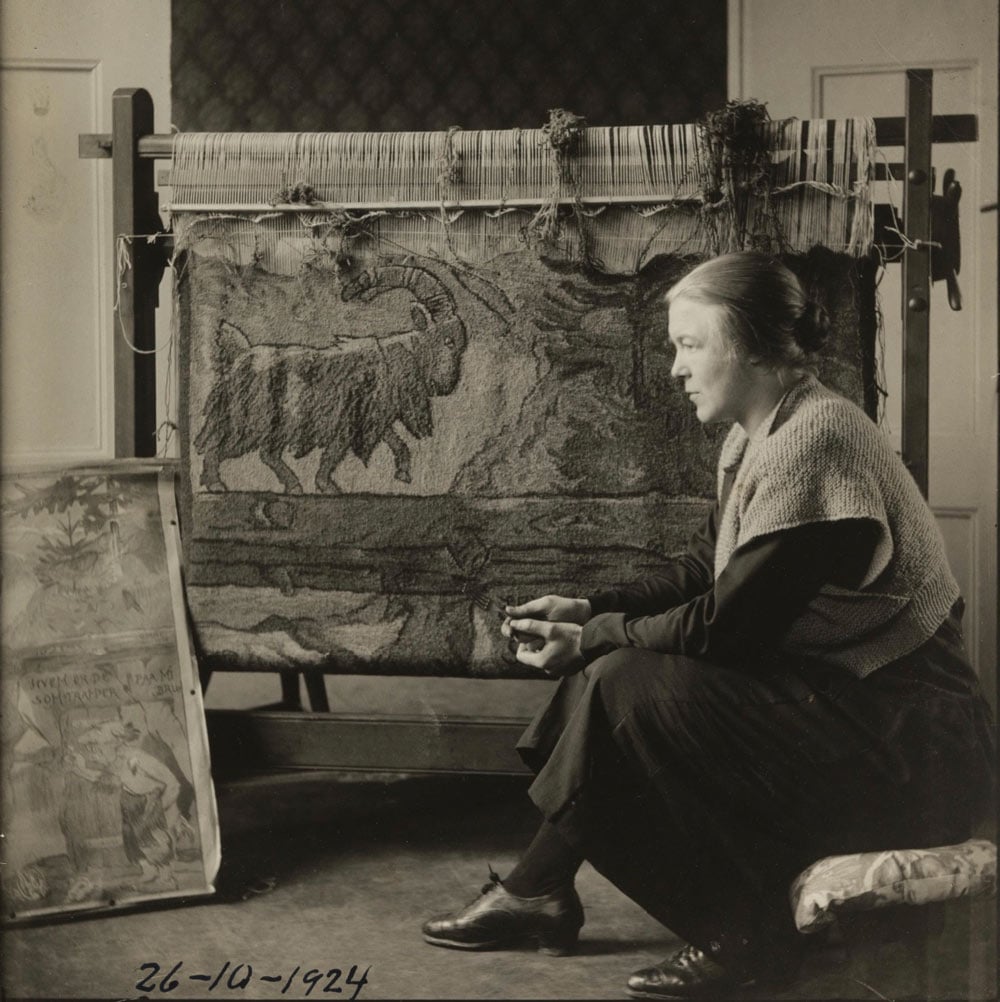
 Ragna Breivik was a Norwegian artist best known for her skill in textile and woven arts. Born in the Bergen area in 1891, she began learning the craft from her mother. By age 10, she had an established skill set and spent the rest of her life refining it. By the time she died in 1965, Ragna had created many beautiful pieces, including the tapestry series Åsmund Frægdegjeva.
Perhaps one of her most well-known works, this series is a collection of ten tapestries that tell the medieval ballad Åsmund Frægdegjeva, who rescued Princess Ermelin from the trolls of Trollebotn. The works were created over the course of 25 years, and she drew her inspiration from the Norwegian artist Gerhard Munthe’s drawings of the subject. The tapestries have an authentic medieval feel to them, due in part to her use of color and weaving technique.
The collection has previously been on display in museums around the world, including the United States at places such as Vesterheim and the Metropolitan Museum of Art. The tapestries’ home museum is Hordamuseet, which is a folk museum close to Bergen. The exhibit is moving to the Bryggens Museum in Bergen for a limited time and will not only showcase Breivik’s famous tapestries but delves deeper into her life and contributions to the weaving crafts.
In addition to being a textile artist, Ragna Breivik was also known as a teacher. She first trained in Norway for both weaving and the art of dyeing using vegetables. She later went to the United States for an artist residency that lasted 5 years where she experimented with her craft and developed over 6,000 color shades to be used for the weaving arts. Her passion for weaving was equaled by her interest in Norwegian mythology and history. Her works were instrumental in keeping both passed on to other generations.
Breivik continued to create tapestry works up until 1964, just one year before her death. Her devotion and contributions to the craft continue on and are celebrated through exhibitions such as this one.