
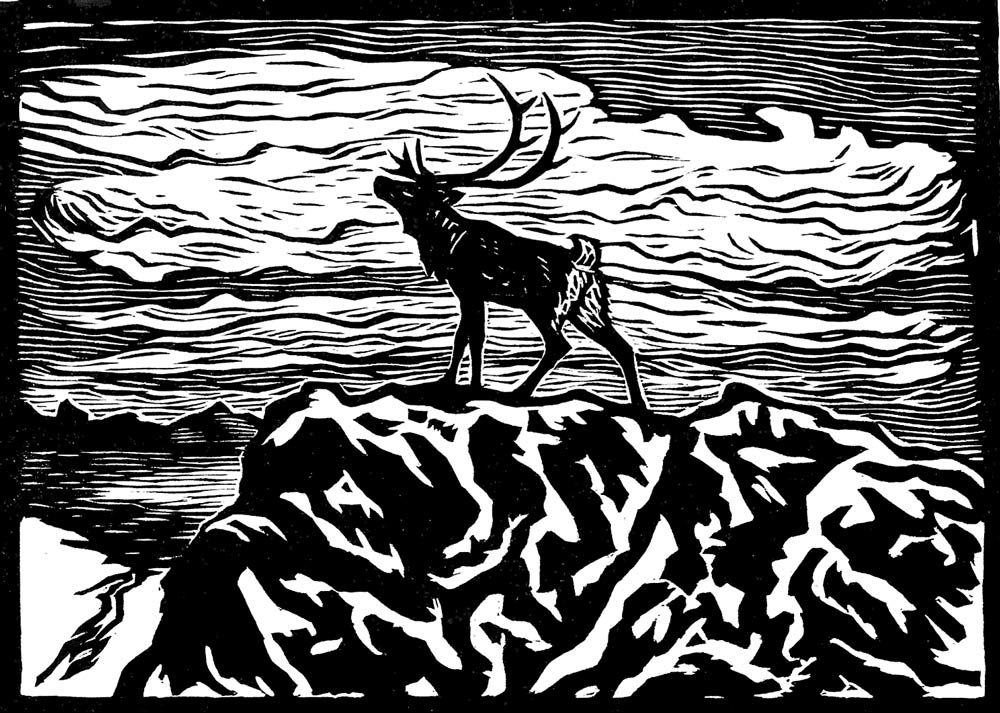
John Savio, Public domain, via Wikimedia Commons
The woodcuts of early 20th century modern artist John Savio were the first of their kind and tell the tale of Sámi daily life at the time. According to klikk.no, Savio is of the most well-known Norwegian Sámi people and possibly the most significant Sámi artists of all time.
Savio’s early life was marked by tragedy; he was orphaned at age 3 and raised by his grandparents. John was encouraged early on to pursue his artistic talent and as his family were wealthy merchants, they could afford to support his studies. He was sent to primary and secondary schools in Vardø and Bodø, finally moving to Kristiania (current-day Oslo) to complete high school. While he was there, he took advantage of evening school at the State School of Crafts and Art Industry (Statens håndverks- og kunstindustriskole).
His busy life took its toll: the tuberculosis he’d contracted at home steadily worsened. Even after a significant lung operation, his health remained affected as long as he lived.
Despite being from a well-to-do family, as an adult Savio was plagued by poverty. In the 1920s, he traveled around Norway knocking on doors and selling his woodcuts for fast cash. He didn’t earn much, but this resulted in his art becoming distributed at both public and private levels. Savio would often barter or pawn his art to make ends meet.
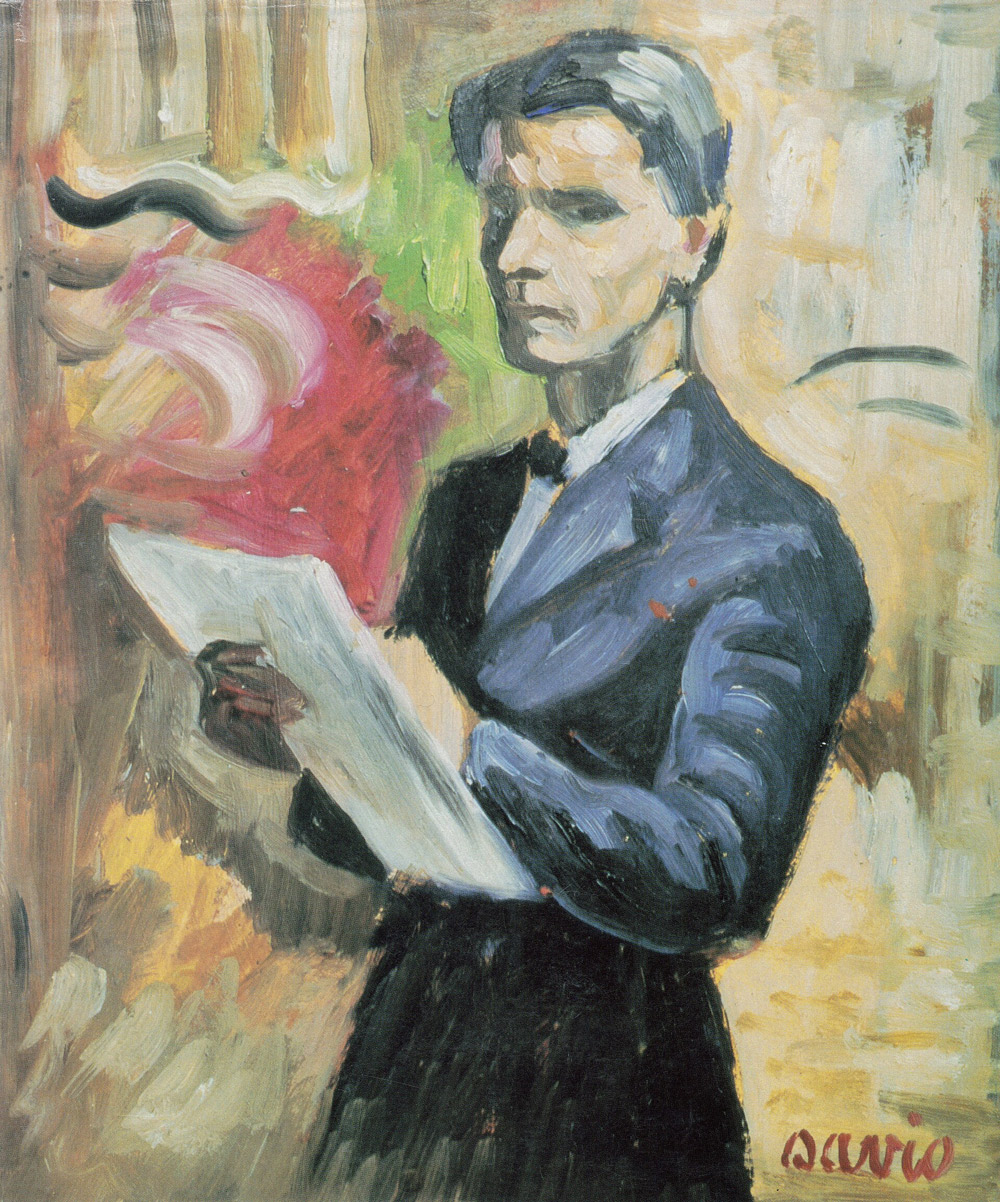
John Savio, Public domain, via Wikimedia Commons
At age 32, Savio took a grand tour of Europe, visiting Munich and Cologne in Germany and staying in Paris for months. He had a well-received exhibition in Paris in the summer of 1936.
Savio was also a painter, but the bulk of his works are woodcuts with stark lines and themes of the natural world: wolves, trees, Sámi dogs and reindeer.
His influences were French expressionists, Norwegian artists Nikolai Astrup, Edvard Munch, German Renaissance artist Albrecht Dürer, known for his intricate woodcuts. One of Savio’s famous pieces is called Ganda ja nieida—boy and girl—which shows a young Sami pair in love. Another work called Okto / Loneliness points to Savio’s feelings of distance from others.
Back in Kristiania, he lived as a starving artist and mostly avoided the established art spaces. He became increasingly ill from tuberculosis and died in 1938. Despite huge memorial exhibitions taking place after his passing, Savio was buried in a pauper’s grave. Over 400 works were displayed at the 1939 and 1941 memorial events.
Visit the Savio Museum in Kirkenes, Finnmark County to find a sizable collection of Savio’s works. Read more about this area of Norway in the May/June 2026 issue of Viking.
Sources:
https://lille.snl.no/John_Savio
http://no.wikipedia.org/wiki/John_Savio
https://en.wikipedia.org/wiki/John_Savio
https://nordnorge.com/artikkel/john-savio-var-samelands-forste-moderne-kunstner/